

Why this matters: Understanding the Moon is the key to understanding Earth's past and our future as a multi-planetary species.
The Moon Illusion
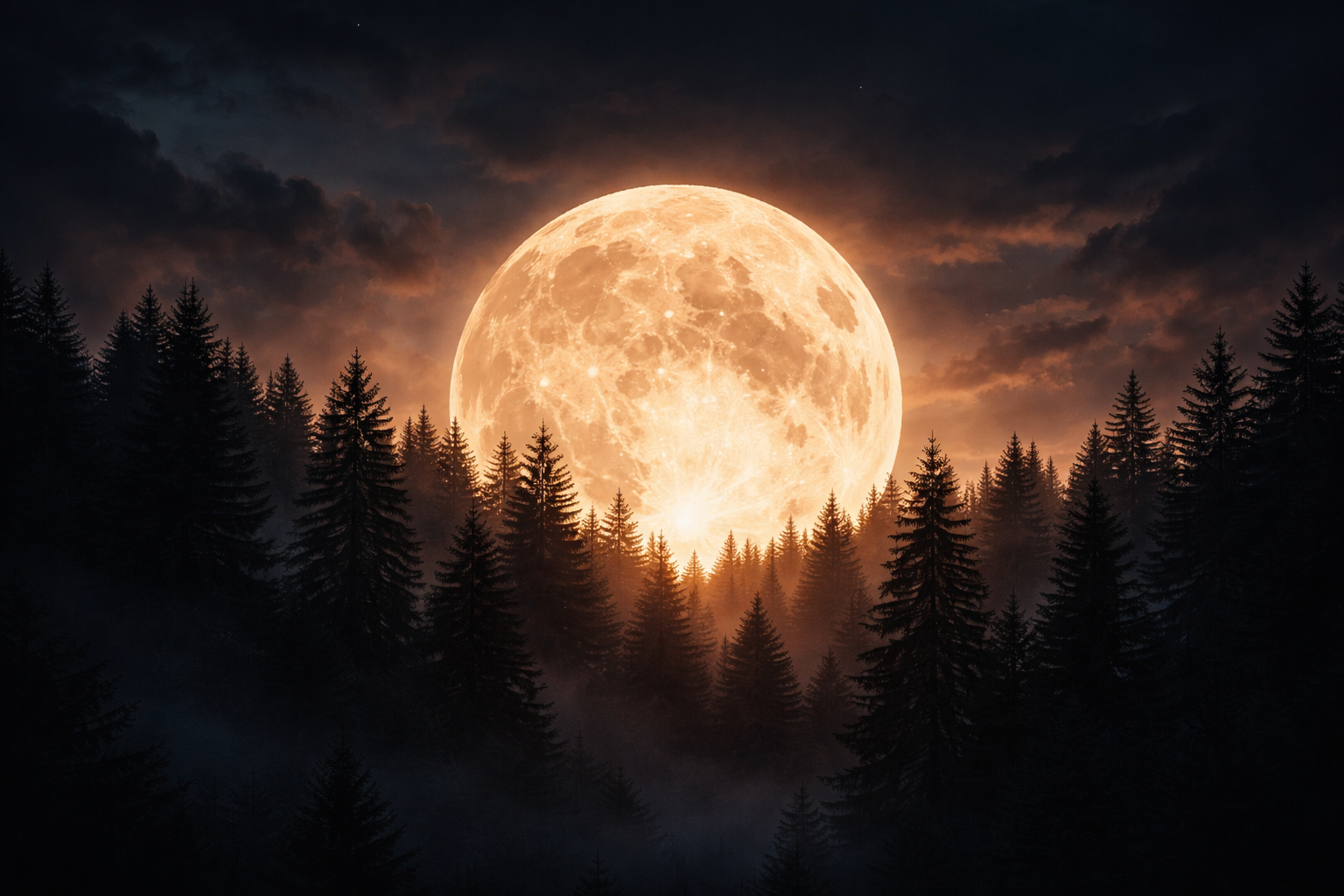
Have you ever noticed that the Moon looks massive when it is near the horizon, but small when it is high in the sky?
Quick Challenge: Why does this happen?
In this lesson, we will go beyond the illusion and explore the physical reality of our closest celestial neighbor.
The Birth of a Satellite
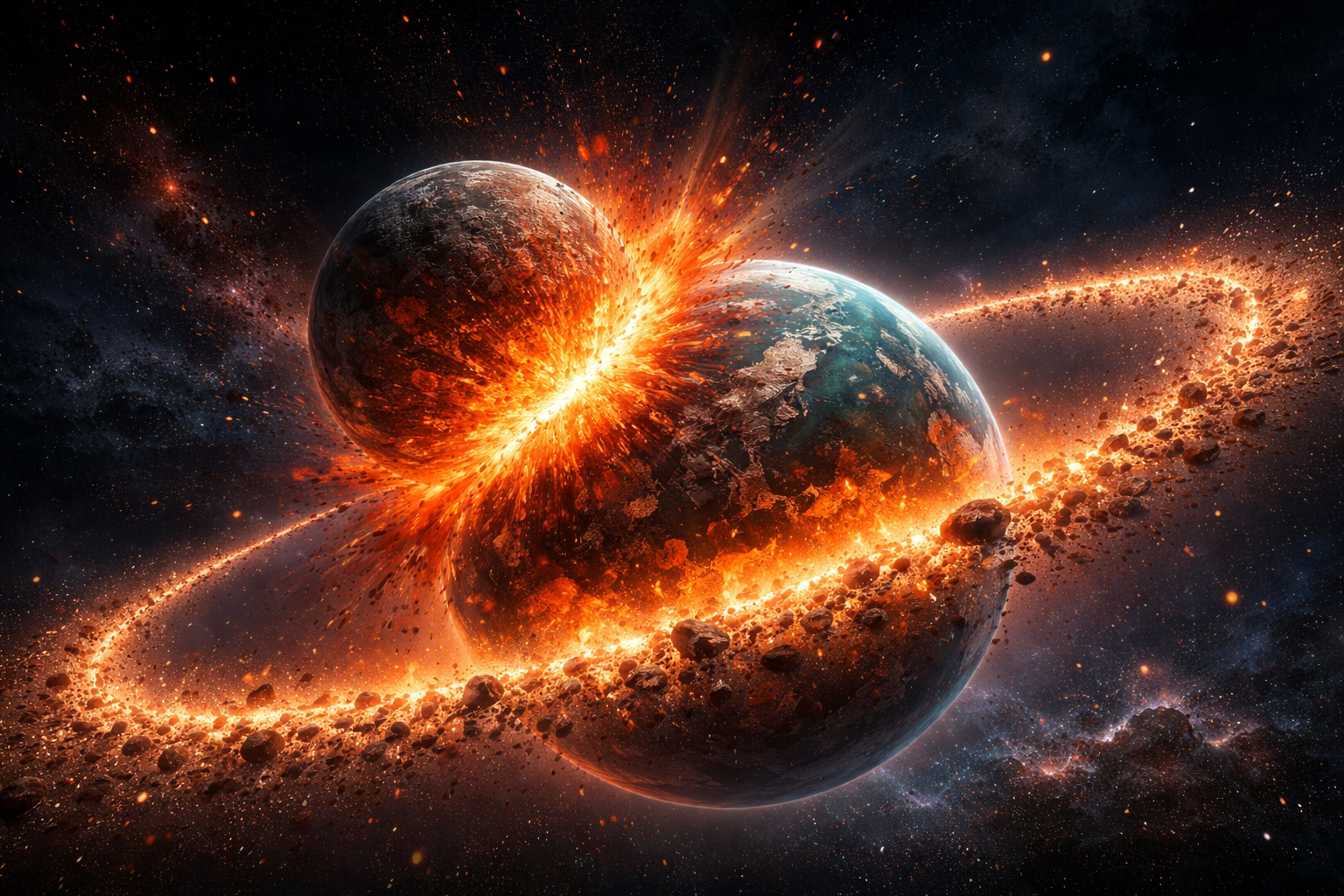
Where did the Moon come from? For decades, scientists debated several theories. Today, the Giant Impact Hypothesis is the gold standard.
About 4.5 billion years ago, a Mars-sized planet called Theia smashed into the young Earth. The resulting debris coalesced in orbit to form the Moon.
Evidence: Lunar rocks have oxygen isotopes nearly identical to Earth's, suggesting they share the same origin.
This theory suggests the Moon was a wandering asteroid "captured" by Earth's gravity.
The Flaw: If this were true, the Moon would likely have a different chemical composition than Earth. However, they are chemically twins.
Faces of the Night
The Moon doesn't produce its own light; it reflects the Sun. As it orbits Earth, the portion we see illuminated changes, creating Phases.
Waxing
Illumination is growing (moving toward Full Moon).
Waning
Illumination is shrinking (moving toward New Moon).
The Moon is also tidally locked to Earth. This means it rotates on its axis at the same speed it orbits Earth, which is why we always see the same face!
Knowledge Check
If you see the Moon as a "sliver" that is getting larger night after night, which phase is it in?
The Tug of War
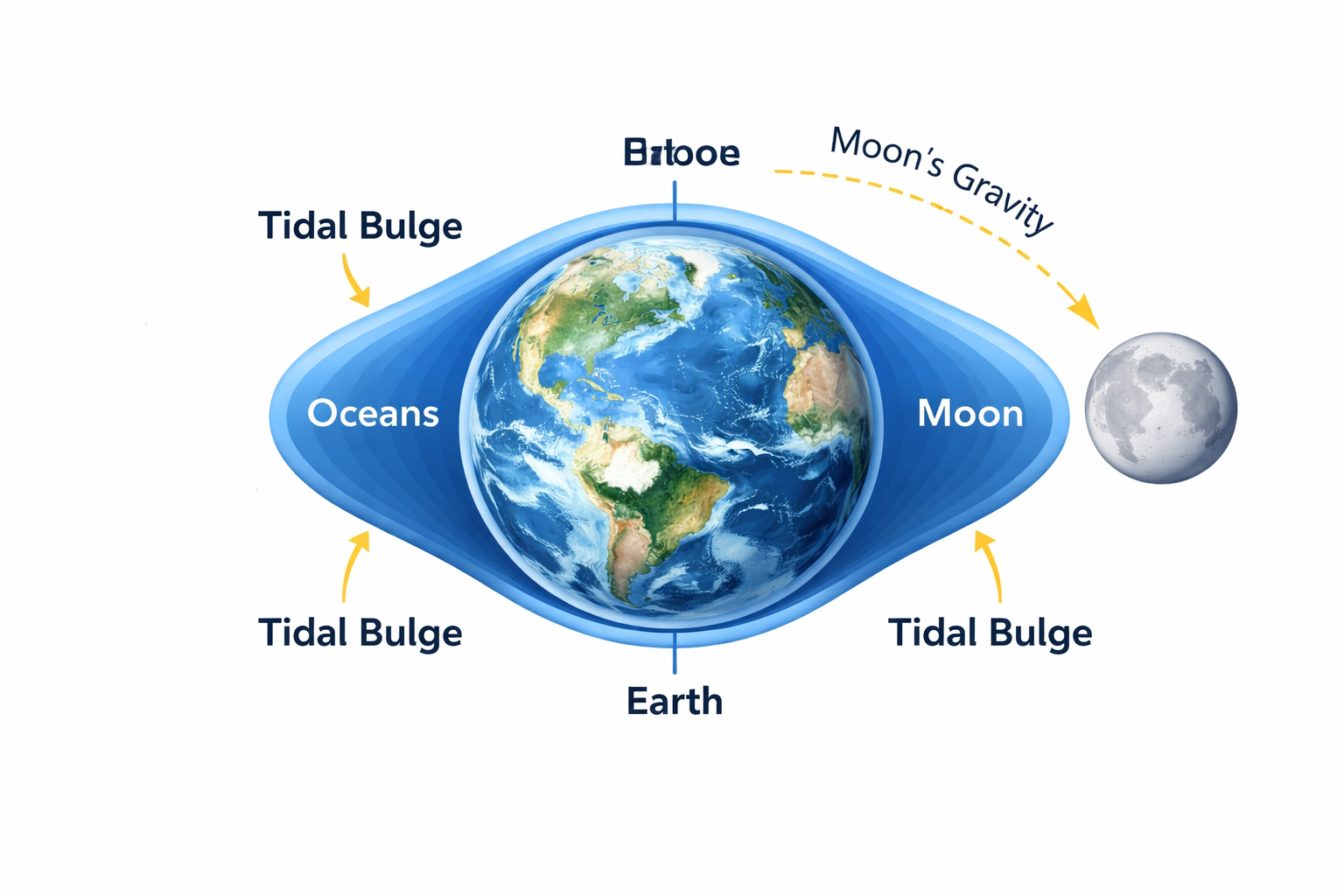
The Moon's gravity pulls on Earth's oceans, creating a "bulge" of water. Because Earth rotates through these bulges, we experience high and low tides.
- Spring Tides: Occur when the Sun and Moon align (New/Full Moon). Gravity combines to create the highest high tides.
- Neap Tides: Occur when the Sun and Moon are at right angles. Gravity cancels out, creating the lowest tidal range.
To the Moon and Beyond
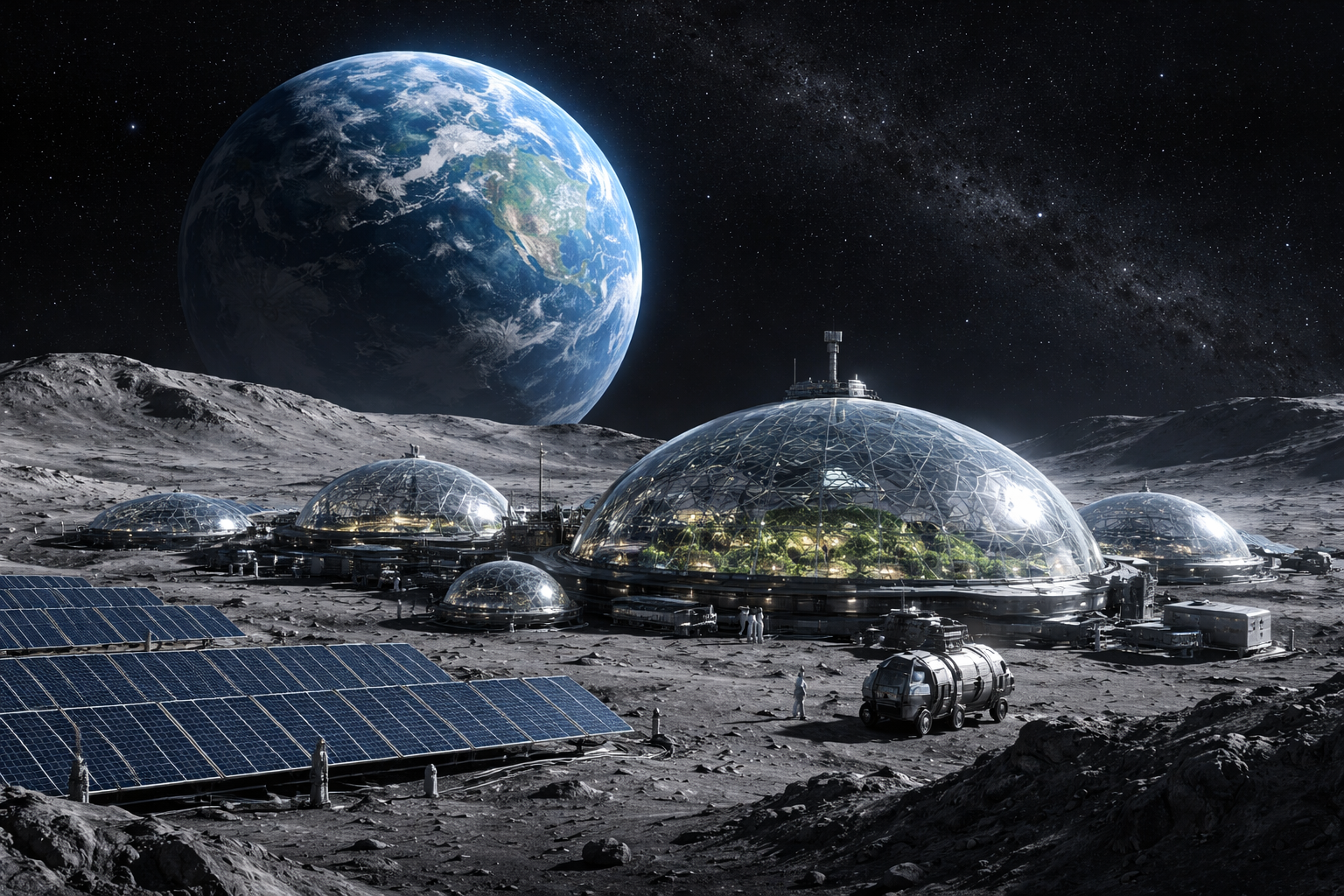
Humanity first stepped on the Moon in 1969 with the Apollo missions. But we haven't been back since 1972. That is about to change.
The Artemis Program
NASA's Artemis program aims to land the first woman and first person of color on the Moon. The goal isn't just to visit, but to build a sustainable presence as a stepping stone to Mars.
Knowledge Check
During which moon phase would a surfer likely experience the absolute highest high tides (Spring Tides)?
Key Takeaways
- Review the core ideas.
- Connect concepts to practice.
- Prepare for assessment.
Assessment Starting
You are about to begin the assessment. Select the best answer for each question.
Final Assessment: Q1
Which piece of geological evidence most strongly supports the Giant Impact Hypothesis over the Capture Theory?
Final Assessment: Q2
If the Moon is positioned at a 90-degree angle relative to the Earth and Sun, what tidal phenomenon occurs?
Final Assessment: Q3
What is the primary reason Earth observers only see one side of the Moon?
Final Assessment: Q4
You observe a "Waning Gibbous" moon. What will be the next major phase in the lunar cycle?
Final Assessment: Q5
What is a key strategic goal of the Artemis program that differs from the Apollo missions?
Mission Debrief
Your lunar exploration score: